CC™ VideoSpective
Thursday
Wednesday
HOW THE FULANI HIJACKED THE THRONE OF ILORIN
CC™ VideoSpective
CREDITS: OLAOYE POPOOLA TV
Monday
Sunday
Friday
National Disgrace - How former dictator and Fulani irredentist Muhammadu Buhari died in a £4000 a day private clinic in London
![]() |
| Late Buhari and his cows |
By Staff
The London Clinic, following the death of Nigeria’s former President, Muhammadu Buhari, has come under public scrutiny over its reputation as one of the United Kingdom’s most exclusive private hospitals.
Buhari passed away on Sunday, July 13, 2025, at the Harley Street-based hospital after reportedly suffering a relapse just hours before his anticipated discharge.
According to Buhari’s nephew, Mamman Daura, the former President was in high spirits on the eve of his death and was being prepared for discharge when his health suddenly deteriorated.
“I left him about 9 pm on Saturday in high spirits and promised to see him on Sunday afternoon. He was looking forward to his doctor’s visit on Sunday morning. But around midday, he started having breathing challenges and doctors rushed to his side to try and manage it. But unfortunately, around 4.30 pm, he gave up the ghost,” Daura stated..
Although the exact cause of death was not made public, Buhari had a history of recurring health issues. His former spokesperson, Garba Shehu, announced the death on Sunday.
“The family of the former president has announced the passing of the former President, Muhammadu Buhari, GCFR, this afternoon in a clinic in London. May Allah accept him in Aljannatul Firdaus,” Shehu said.
Details About The Hospital Where Buhari Died
Founded in 1932, The London Clinic has long been recognised as a haven for global elites seeking world-class medical care. It is situated in London’s medical district on Harley Street and has served members of the British royal family, world leaders, and affluent patients from around the globe.
The facility is best known for its expertise in cancer care, digestive health, orthopaedics, robotic surgery, and intensive care.
Its 2021 financial report revealed that the hospital sees over 120,000 patients annually and operates with more than 900 surgeons and physicians. The hospital houses 13 intensive care beds, 10 operating theatres, five Macmillan Cancer Support Centres, and offers advanced robotic surgical technology including the da Vinci Xi and Excelsius GPS systems.
The hospital’s reputation for excellence comes at a significant financial cost. UK-based Nigerian doctors familiar with the clinic revealed that consultations range from £100 to £750, CT scans cost around £500, and major surgeries start at £10,000 and can reach £13,000, depending on their complexity.
Accommodation charges are equally steep. A standard room costs between £1,000 and £1,800 per night, while luxury or VIP rooms range from £1,800 to £2,500 per night. Admission to the Intensive Care Unit can cost up to £3,500 per night.
A 2023 study by the National Institutes of Health estimated that general ward bed spaces at the hospital cost an average of £586.59 per day, excluding other potential charges tied to individual treatment plans.
Speaking to reporters, a UK-based Nigerian doctor familiar with the hospital’s operations, described it as one with advanced facilities, a high-profile clientele, and world-class medical expertise.
According to him, patients pay between £100 and £750 for consultations, depending on the complexity of their case.
The Nigerian doctor, who stated that he knew two fellow Nigerian doctors who had once worked at the hospital, mentioned that a Computed Tomography scan (CT Scan) at the hospital costs approximately £500, while major surgeries range from £10,000 to £13,000.
He said, “In terms of accommodation, the pricing structure is also tiered. A standard room goes for £1,000 to £1,800 per night. Luxury/VIP room is between £1,800 to £2,500 per night; while the Intensive Care Unit admission costs about £3,000 to £3,500 per night.
“The clinic is known for its advanced equipment, specialist services, and highly qualified professionals. It’s a facility designed for complex and high-risk cases.”
The doctor said the two respected Nigerian specialists who used to work at the hospital were an orthopedic surgeon and a respiratory consultant.
According to the female doctor, the clinic primarily caters to the super-rich, noting that patients are charged thousands of pounds daily for specialised services, particularly in intensive care and private suites, where discretion, luxury, and top-tier medical attention are guaranteed.
“It is the best and largest private clinic in the United Kingdom. It deals with surgery, robotic surgery, ENT surgery, plastic surgery, and the best in specialised services,” she said.
She added that the hospital is equipped with advanced da Vinci Xi, ExcelsiusGPS, and NAVIO robotic surgical technology, a 3 T Siemens MRI, multiple CT scanners, a PET-CT, ultrasound, digital mammography, and other cutting-edge diagnostic systems.
In terms of staffing and expertise, the doctor said, “The clinic boasts an impressive roster of professionals with renowned specialist consultants, many of whom are Fellows of the Royal College of Surgeons and hold additional high-level certifications.”
However, according to a study by the National Institutes of Health, the cost of a bed space at the general ward is around £586.59 per bed day.
“These costs may not include other potential fees or charges associated with your specific treatment plan,” the report noted.
According to the hospital’s website, its ICU boasts a Standard Mortality Rate of 0.7, one of the best in the UK, and has consistently maintained low death rates.
The hospital wrote, “Our Standard Mortality Rate averages around 0.7, which the Critical Care Peer Review states ‘would put the unit in the top 10% of the country’ and has consistently maintained low death rates, all of which are reviewed at Mortality and Morbidity Meetings within the clinic.
“Patient Experience feedback continues to demonstrate 95-100% satisfaction with their treatment across the MDT with numerous comments and compliments mentioning excellence in staff attitude, caring, compassionate, along with recognition of speciality surgical support and rehabilitation.”
Wednesday
Amazon closes Federal Way grocery store
CC™ Viewpoint
By Staff
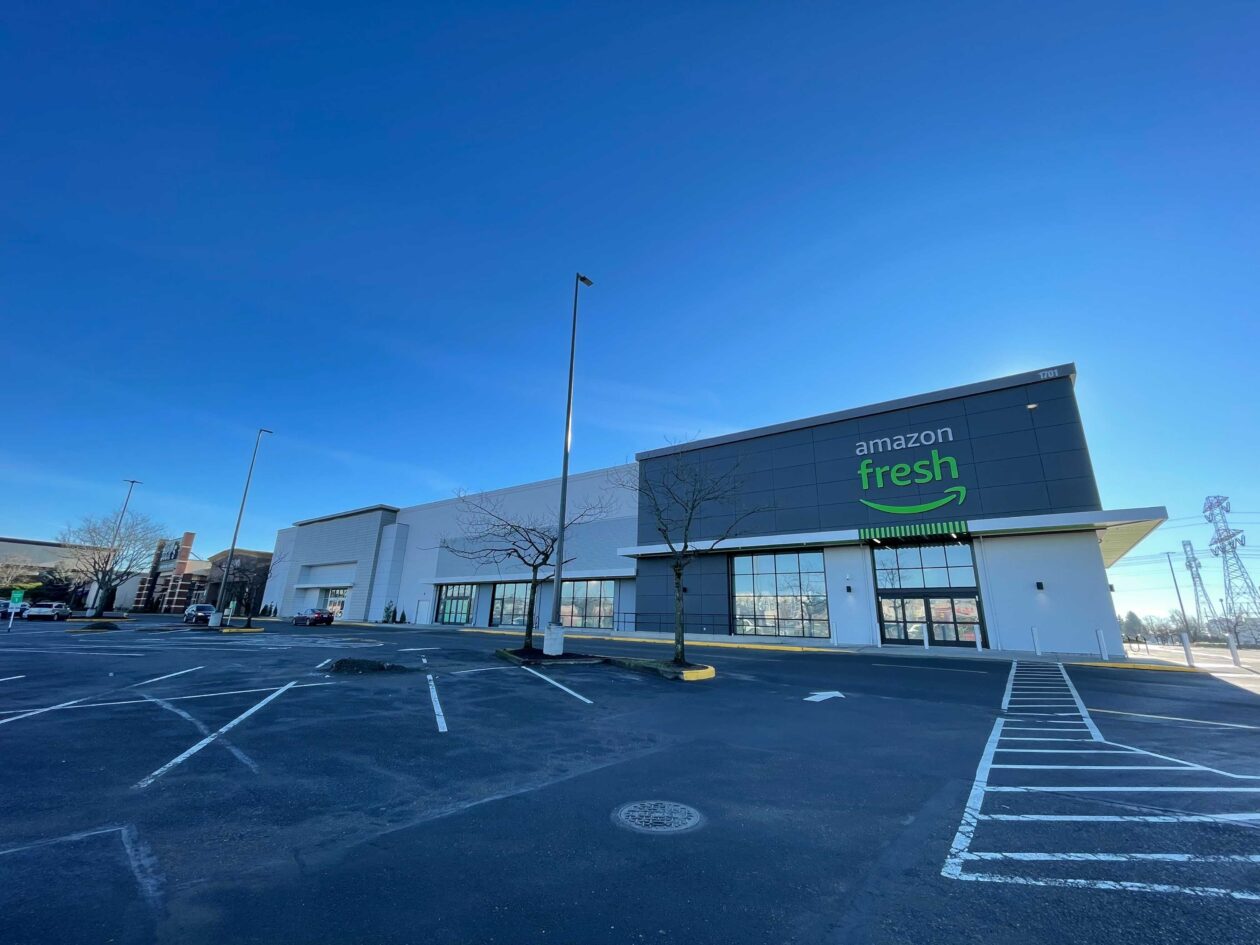
Amazon has closed its Amazon Fresh grocery store in Federal Way, Washington, affecting 125 employees. The store, located at The Commons mall, closed on Sunday, June 22, 2025 after about three years of operation.
Amazon stated that the closure is due to an assessment of their offering, with some locations performing better than others.
Customers in the area can still access groceries through Amazon’s online options with same-day delivery, according to an Amazon spokesperson.
The closure of the Federal Way store is part of a larger trend of Amazon refining its physical store strategy. The company has recently closed other locations, including a Whole Foods Market in Seattle's Capitol Hill neighborhood.
Amazon has been experimenting with different store formats, including Amazon Fresh grocery stores and Amazon Go convenience stores, and is now focusing on refining its portfolio based on customer preferences and performance.
The Federal Way store was previously a Sears location and was renovated by Amazon before opening in 2022. Ironically, the closure comes after Amazon recently updated the store with Dash Carts Employees affected by the closure have been offered the opportunity to transfer to other Amazon Fresh locations.
Amazon operates three other Fresh grocery stores in Washington, including two in Seattle and one in Bellevue.
Tuesday
Fulani militias kill more than Boko Haram – Expert
CC™ Viewpoint
By Kareem Azeez
Fulani militias have emerged as Nigeria’s deadliest non-state armed group, eclipsing Boko Haram and ISWAP in civilian deaths, yet remain largely overlooked by global terrorism monitors, a security expert has warned.
This is according to security expert Steven Kefas who cited preliminary data from the Observatory for Religious Freedom in Africa (ORFA) showing that between October 2019 and September 2024, Fulani Ethnic Militias (FEM) were responsible for 47 per cent of all civilian killings in Nigeria — more than five times the combined death toll of Nigeria’s jihadist groups.
ORFA’s figures are stark: 36,056 civilians killed, 13,437 incidents of extreme violence, and over 29,180 abducted with kidnappings rising from 1,665 in 2020 to 7,648 in 2024 . Up to 3.4 million people have also been internally displaced, mostly from Nigeria’s Middle Belt.
Yet despite the rising toll, Fulani militias have vanished from international terror rankings like those published by the Global Terrorism Index (GTI). According to Kefas, their violence is mis-categorised as communal or ethnic conflict, making it invisible to international security frameworks and humanitarian aid.
Their methodical, low-profile campaigns where 79 per cent of attacks are land-based raids on farming settlements focus on abduction, killings, sexual violence, and arson. Recent atrocities include the June 13–14 Yelwata massacre in Benue State, where more than 150 mostly women and children were reportedly slaughtered, and the Agatu killings in early 2016, which claimed up to 500 lives .
“In Agatu in 2016 and again in Yelwata in 2025, these militias targeted farming communities in their sleep,” Kefas said. “This isn’t random violence; it’s systematic ethnic cleansing aimed at reshaping demographic landscapes.”
He criticises the GTI’s narrow focus on spectacular jihadist violence, which overlooks slow-motion genocide by groups like FEM. This mislabelling has real-world consequences, Kefas warned, diverting international aid and counter-terrorism assistance away from some of the most afflicted regions .
Beyond civilian deaths, the destruction undercuts national food security. As Christian farming communities are emptied, local agricultural production suffers, deepening economic distress across the region.
Kefas urged security analysts and global institutions to expand their definitions of terrorism to include systematic cartel-style militia violence. “These are fathers, mothers, children whose lives were cut short while the world’s gaze remained elsewhere,” he said. “Without recognition as terrorism, there’s little hope for resources, accountability or justice.”
International attention, Kefas concluded, must shift, terrorism is not only the flash of a bomb, but the silent erasure of entire communities.


